
You wake up in the morning. You see a small puddle of liquid near your vehicles wheel. This liquid is yellow at first, but turns brown after it has been sitting there for a while. When you touch this liquid you notice that it is slippery and feels like oil.
At Choice Auto Repair, we talk to people who drive vehicles every day. When they tell us that they see drops of liquid under their vehicle and are hoping that it is not a big deal and that they can wait to get it taken care of. The truth is, when it comes to brake fluid, waiting is not a good idea! Your vehicle’s braking system relies on pressure, and brake fluid is what makes this pressure happen. If the brake fluid leaks out your car or truck, stopping power can be reduced quickly without warning.
What Does Brake Fluid Look Like? How Can You Tell It Apart From Other Liquids?
Brake fluid is a slippery liquid. When it is new it is clear or light yellow. As it gets older it turns amber or brown. At first it might look like motor oil, but it will feel different because it stays slippery even when it spreads out.
You can usually find brake fluid leaks in these places:
- Near the inside of a tire
- Under the driver-side area of the engine, where the master cylinder and reservoir’re
- Along the underside of the vehicle, where the brake lines are
If you are not sure what you are looking at, it is a good idea to treat any unknown liquid leak as an emergency until you can figure out what it is.
Why Are Brake Fluid Leaks A Big Deal?
When you press the brake pedal the force of your foot goes through the brake fluid to make the brakes work at each wheel. If the system leaks, the pressure can drop. This means that your brake pedal can feel soft and will take longer to stop the brakes. In some cases, the brakes will not work at all!
Even a small leak can be a problem. It can start with a drop but turn into a big failure if the seals wear out or a rusty line breaks.
Common Signs That You Might Have A Brake Fluid Leak
Suppose you see a puddle of liquid under your vehicle that is a sign that something’s wrong. You should look into it. Your vehicle can tell you that something is wrong in two ways: how it feels and how it works. Some common signs of a brake fluid leak include:
- The brake pedal feels soft. It goes down far before the brakes work
- The brakes do not work consistently so sometimes they work well and sometimes they do not
You might also see a brake warning light come on. If your brake pedal suddenly feels different, you might have a leak pull over to a safe place and stop driving until you can get it checked.
What Causes Brake Fluid To Leak?
A brake fluid leak happens when an important part of the system stops working and can no longer keep the fluid inside. This can happen because of wear and tear on the parts. It can be hard to find the leak because some leaks are easy to see and others are hidden.
The process of finding a leak usually starts with looking at the area under the vehicle then checking the parts like the master cylinder, brake lines and wheels. If there is a leak dirt can build up on the area and make it hard to see the problem so it is a good idea to clean the area and look again.
Parts Of The Brake System That Are Most Likely To Leak
Brake lines are the tubes that carry brake fluid from the master cylinder to each wheel. They are made to work under a lot of pressure. Over time they can leak. This can happen because of road salt, moisture, dirt and changes in temperature in vehicles that drive in the winter.
Rust and holes in the brake lines are problems. The line can start to leak then suddenly break when you press the brake pedal hard. That is why it is a good idea to check the brake lines when you take your vehicle in for service because brake line problems can be hard to detect until they become serious.
The master cylinder and reservoir are usually located on the drivers side of the engine. If the reservoir is leaking you might see wetness around it. The level of brake fluid might go down even if you refill it.
If the master cylinder is faulty it can cause the brake pedal to go down far even if there is no puddle of liquid on the ground. If you see any moisture in this area you should get it checked out.
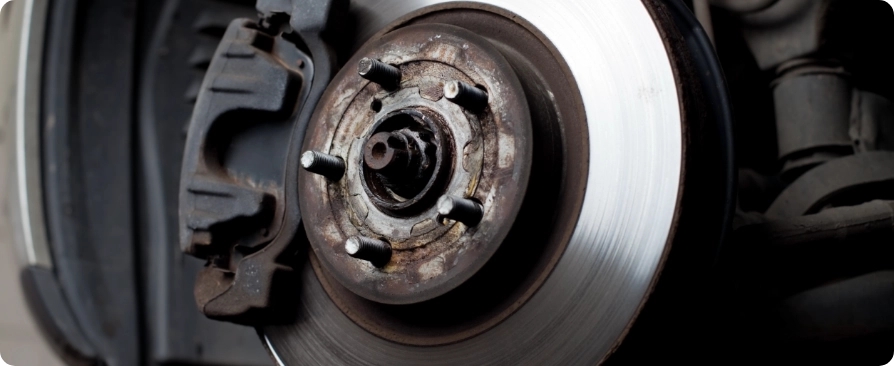
The calipers, wheel cylinders and seals at the wheels can also leak. You might see spots of liquid on the ground near the wheel or liquid might collect on the inside of the tire or the backing plate.
The main cause of brake problems is worn-out brake pads or shoes. When they get too thin the caliper piston or wheel cylinder piston has to move, which can put much stress on the seals and make them leak.
Hoses and fittings can also leak. The flexible brake hoses can crack, swell or leak at the connections and the fittings can come loose or corrode. This can happen because of vibration, impacts and age.
What To Check If You Think You Have A Leak
If you think you might have a brake fluid leak you should check the brake fluid reservoir to see if the level is low. Do not drive your vehicle until the level is up to the mark and the reservoir is full!
You should also look at all the wheels and the master cylinder area to see if there are any signs of liquid. If the brake pedal feels soft or goes down far you should get it checked away because it can be dangerous to drive.
Do not just add brake fluid, hoping that alone will fix the problem, because the leak will still be there and it can cause the pressure to drop when you press the brake pedal.
Is It Ever Safe To Drive With A Brake Fluid Leak?
In some cases, it is not a good idea to drive your vehicle if you think you have a brake fluid leak. Even small problems can turn into big ones quickly.
If you see spots that might be brake fluid you should get your vehicle checked right away. If you are driving and you notice that your brake pedal feels different, you should pull over to a safe place and stop driving. It is better to be safe than sorry. The cost of getting your vehicle towed is less than the cost of repairing the damage from an accident.
What We Will Do During A Brake Fluid Leak Inspection?
We will check your vehicle to find the source of the brake fluid leak and make sure your brakes are working safely. We will check the reservoir level. We will look at the condition of the brake fluid.
We will also check the brake lines and hoses for signs of corrosion or damage, checking each wheel to see if there are any signs of leaks or worn-out parts.
After we fix the brake fluid leak, we will bleed the brake system to get rid of any air, and make sure the brake pedal is working properly.
The Bottom Line: Do Not Ignore The Leak
Brake fluid leaks can start small. They can cause problems quickly. If you see light to liquid spots under your vehicle especially near a wheel or your brake pedal feels soft or different you should get it checked.
Contact us at Choice Auto Repair today at (984) 363-4876 to make an appointment, for a brake system inspection. We will find the source of the brake fluid leak and get it fixed so you can drive safely again!