
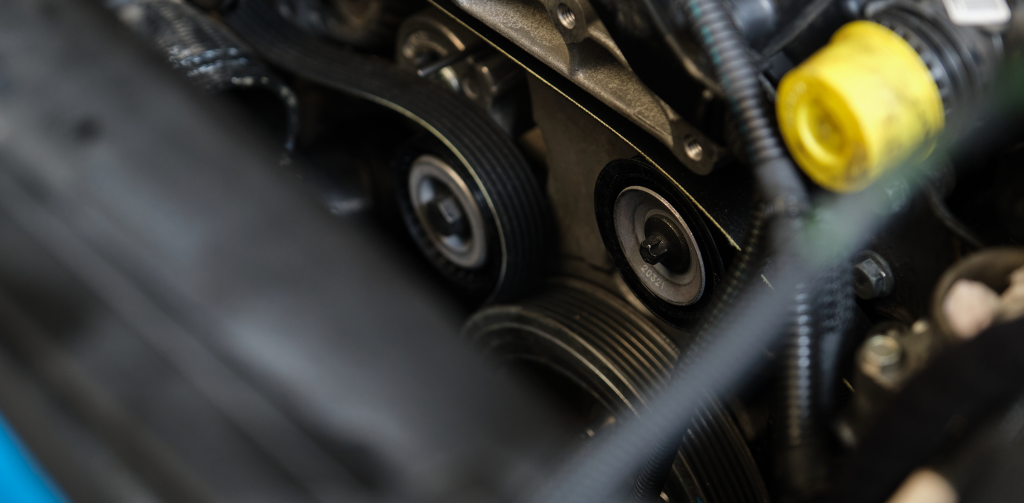
The engine in your car depends on a complex network of drive belts for it to work properly. These make up the power transmission system, delivering the power from your crankshaft in your engine to essential components in your car. If your drive belts don’t work, your essential units, like your alternator, power steering, air conditioner, and water pump, will not work either.
It’s not just the technicians who should know the difference between a timing belt and a serpentine belt, it’s something you as a car owner should also know so you don’t shell out a fortune on fixes. Each belt serves a different purpose and is used in different parts of your engine, so their maintenance requirements and consequences if they fail are also different.
When you take care of your drive belts, you’re investing in:
- Better engine performance and reliability
- Prevention of costly engine damage
- Longer lifespan for your vehicle
- Safer driving conditions
Neglect when maintaining your belts can result in engine performance problems, ranging from low function to total engine failure. Being aware of the telltale signs and when you need to replace your belts, you can avoid these expensive problems and maintain your vehicle to run at its best.
Understanding Drive Belts: Serpentine vs Timing Belts
Drive belts are flexible rubberized parts that are the power transmission system of your car engine. These vital parts distribute mechanical power from the crankshaft to other engine parts, making your car’s systems function efficiently and smoothly.
Serpentine Belt Function
The serpentine belt gets its name due to its snake-like course as it wraps around many pulleys in your engine compartment. The one belt powers multiple essential accessories at the same time:
- Air conditioning compressor – keeps your cabin cool
- Power steering system – provides easy steering control
- Alternator – charges your battery and powers electrical systems
- Water pump (in some vehicles) – circulates coolant through the engine
You can easily spot the serpentine belt by looking under your hood – it’s the wide, ribbed belt that’s clearly visible on the front of your engine.
Timing Belt Function
The timing belt is working silently behind the scenes, camouflaged within your engine block. Its function is to coordinate crankshaft and camshaft rotation, a critical responsibility.
The serpentine belt function is accessory-oriented, while that of the timing belt function is engine timing precise.
- Valves open and close at exactly the right moments
- Pistons move in perfect coordination with valve operation
- Fuel injection occurs at optimal timing
- Engine compression remains consistent
This ensures that pistons do not hit valves and result in engine damage. The timing belt also powers accessories such as the oil pump and fuel injection system in most engines.
Serpentine belts vs. Timing belts: What’s the difference every driver should know
When considering the serpentine belt vs timing belt war, location is the most self-evident divider. You’ve got a clear sight of your serpentine belt by opening your hood, it’s directly in front of your engine, running over some pulleys in a large loop. Your timing belt is hidden behind protective guards deep within your engine block, so you can’t see it unless you pull your engine apart.
Function separates these belts dramatically:
Serpentine belts power your comfort and safety accessories, air conditioning, power steering, alternator, and cooling system
Timing belts control the heart of your engine’s operation by synchronizing valve and piston movements
The engine components driven by belts reveal another crucial difference. Your serpentine belt typically operates:
- Alternator (charging your battery)
- Power steering pump
- Air conditioning compressor
- Water pump (in some vehicles)
Timing belts handle more critical internal components:
- Camshaft positioning
- Oil pump operation
- Fuel injection timing
- Water pump (in interference engines)
These functional differences create very different maintenance outcomes. A cracked serpentine belt might strand you with a dead engine or battery, but most times you’ll be able to coast into a repair facility on your own power. A broken timing belt in an interference engine will ruin pistons, valves, and cylinder heads, making what could have been a $200 belt replacement a $3,000+ engine rebuild.
Repair cost and complexity are also influenced by accessibility. Replacement of serpentine belts is 30 minutes, and tool time is negligible. Repairing timing belts requires hours of labor, technical expertise, and usually includes replacing water pumps, tensioners, and seals at the same time.
Symptoms of Worn or Torn Drive Belts: What to Check For
If you discover the signs of serpentine belt wear problems early enough, you can avoid roadside breakdowns and costly repairs. Your serpentine belt normally provides advance warning of its problem by showing some unmistakable signs:
Serpentine Belt Warning Signs:
Loud squealing noises – especially when starting your car or accelerating
Visible cracking or fraying on the belt surface or within the grooves
Reduced power steering assistance, making your steering wheel harder to turn
Battery warning lights appear on your dashboard due to alternator issues
A glazed appearance on the belt surface indicates excessive heat damage
The signs of worn timing belt problems present differently since this component operates internally. These symptoms of bad drive belts related to timing can be more subtle initially, but become severe quickly:
Timing Belt Warning Signs:
- Engine misfires or irregular engine performance
- Stalling or improper idling when your car struggles to maintain steady RPMs
- Difficulty starting your vehicle, especially on cold mornings
- Decreased fuel efficiency as engine timing becomes compromised
- Unusual vibrations or shaking throughout the vehicle
- Exhaust smoke color changes – often appearing white or blue
- Check engine light activation signaling timing-related issues
Many drivers find distinguishing between these belt issues challenging since some symptoms overlap. Engine performance issues, warning lights, and strange sounds can be brought about by either of these belts. Professional diagnosis will be necessary if you notice several symptoms at once, since self-diagnosis could confuse the root cause and expensive repairs in the future.
Dangers of Belt Neglect: Why It Is Important
Ignoring belt upkeep puts your engine and safety at substantial risk. When a serpentine belt dies, it can trigger a domino effect of malfunctions with other systems.
The Consequences of Serpentine Belt Failure
This is what may result when the serpentine belt fails:
- Engine Overheating: The water pump is not able to circulate coolant, causing engine overheating and danger of warping cylinder heads or engine block fracture.
- Loss of Power Steering: The power steering is lost instantly, and your car is uncontrollable, especially for emergency maneuvers when driving or cornering in parking.
- Dead Battery: Your alternator is not charging your battery, and you are stuck with a dead electrical system.
- Faulty Air Conditioning: The air conditioning fails during hot weather, making your and your passengers’ rides uncomfortable and even risky.
The Devastating Effects of Timing Belt Failure
Timing belt failure can have even more severe consequences. When this critical component snaps, it disrupts the synchronization of pistons and valves, leading to catastrophic internal damage:
- Bent valves
- Damaged pistons
- Destroyed cylinder heads
These issues often require complete engine rebuilds or replacements.
The Costly Impact of Belt Failures
The financial impact of these failures can be significant:
- Serpentine belt replacement: $100-300
- Engine overheating repairs: $1,500-4,000
- Timing belt failure damage: $3,000-8,000+
The Importance of Regular Inspections
Regular check-ups are important to avoid such tragedies. Through early detection of problems with just a visual check every few months and a technical inspection at regular maintenance, you can protect your investment and your life on the road.
Don’t forget, prevention is always less expensive than recovery. Preventive maintenance and regular inspections are pennies on the dollar relative to the thousands you’ll pay to repair issues caused by belt failure.
Knowing the serpentine belt replacement mileage and timing belt replacement mileage puts you one step ahead of breakdowns. Timing belts need to be replaced between 60,000 and 100,000 miles, with newer vehicles able to stretch this period up to 120,000 miles. Your owner’s manual will list the actual figures for your make and model.
Serpentine belts, in general, are longer-lived than timing belts and are replaced between 50,000 and 100,000 miles based on belt quality and driving conditions. Frequent city stop-and-go driving deteriorates belts quickly than freeway driving.
Regular visual inspections serve as your first line of defense against belt failure:
Check for cracks – Look for small hairline fractures across the belt’s surface or between the ribs
Inspect for glazing – A shiny, hardened appearance indicates the belt has overheated
Look for fraying edges – Worn or damaged belt edges suggest misalignment issues
Check belt tension – Excessive looseness or tightness affects performance
Do these inspections every month when inspecting other fluids. Inspect for unusual noises at startup or idling because squealing will occur before belt wear, before any visible symptoms arise.
Normal environmental conditions of temperature extremes, oil soiling, and exposure to trash cause degeneration of belts. Vehicles operated in severe environments will require more frequent inspection and earlier replacement than vehicles operated under standard conditions.
Professional Auto Repair Services at Choice Auto Repair
When it comes to professional automotive repair services for drive belts, choosing the right auto mechanic makes all the difference in protecting your investment. We at Choice Auto Repair stand as your trusted car repair partner in the Raleigh area, bringing decades of expertise to every drive belt service.
Our ASE-certified mechanics are knowledgeable in comprehensive drive belt diagnosis and replacement of serpentine and timing belt applications. Our mechanics are extremely aware of the highly involved differences between belt types and utilize comprehensive diagnostic tools to accurately detect faults before they cause expensive failures.
What sets our auto repair services apart:
Digital vehicle inspections with detailed summary reports that provide complete transparency about your vehicle’s condition
State-of-the-art diagnostic equipment, complete belt system analysis
Factory-recommended experience of manufacturer specifications for all models and makes
Same-day availability of most belt replacement work
We realize that auto repair should not interfere with your busy life. That’s why we provide helpful loaner cars with quality repairs so you can continue on your way while we restore your car. Our easy financing options make necessary maintenance affordable on any budget, so you won’t ever have to sacrifice safety or dependability.
Our dedication doesn’t stop at repairing issues – we specialize in preventative maintenance that cost-saves you and keeps you out of the breakdown lane on the highway.
Make the Right Choice: Go with Choice Auto Repair
Your timing and serpentine belts hum along in the background, keeping your engine sound and operational. Disregarding the warning signs presented here could turn routine servicing into gigantic financial expenses. Squeal or strange vibrations today could possibly mean thousands in engine repairs tomorrow.
Don’t wait for it to fail! The first time you sense any sign of belt wear, whether it’s a subpar power steering response, engine misfire, or strange noises, have them serviced immediately. Early replacement saves you from flushing money down the drain and saves your life from deadly roadside breakdowns.
Discovering the basic distinctions between serpentine and timing belts reassures you about the proper way to maintain your car. But correct diagnosis takes expert assistance, particularly when symptoms of different belt ailments are similar.
Ready to have the timing belt or serpentine belt issues diagnosed? Call us at Choice Auto Repair at (984) 363-4876 for professional diagnosis and reliable service tailored to your vehicle’s needs. Our ASE Master technicians know how to make your drive belts, and your engine, reliable for years to come.