
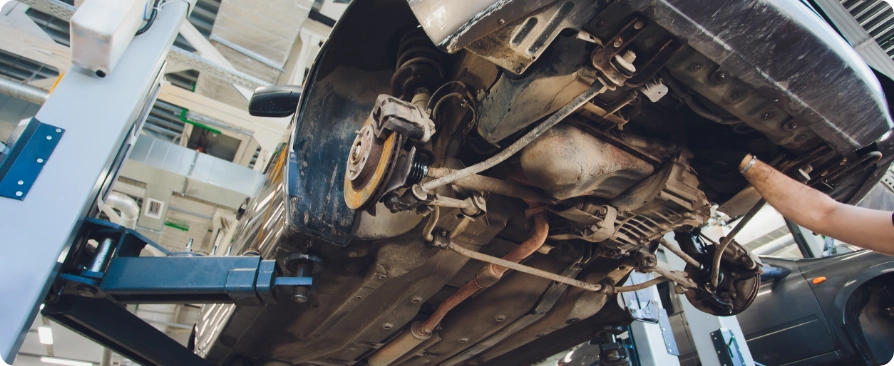
Is your vehicle conversing with you? That little tug to one side or the other when you’re cruising down the road straight might be more than a bit of quirk, it’s your vehicle talking back to you and telling you that it needs to be serviced.
Your vehicle’s alignment is of utmost importance in safety and performance. Alignment is similar to the foundation of your vehicle, when it’s done correctly, you’ll be enjoying:
- Smoother, more controlled handling
- Even tire wear for longer tire life
- Better fuel efficiency
- Reduced strain on suspension components
A misaligned vehicle doesn’t just affect your driving comfort, it can hit your wallet hard through premature tire wear and increased fuel consumption. At Choice Auto Repair, we see many drivers unknowingly driving with misaligned wheels, risking their safety and vehicle performance.
We’ve created this guide to help you spot the warning signs of misalignment. You’ll find out what to look for, learn the fundamentals of wheel alignment, and be able to tell when to bring your car in to have a pro alignment done.
Understanding Wheel Alignment
Your wheel alignment is the exact relationship between your wheels and the suspension geometry of your car. It is the ideal combination of all the parts that enable your car to roll effortlessly down the street.
Three critical angles work together to create proper wheel alignment:
Caster – The forward or backward tilt of your suspension, similar to a shopping cart wheel
Camber – The inward or outward tilt of your wheels when viewed from the front
Toe – The direction your wheels point in relation to your car’s centerline
These alignment angles directly impact how your car handles and performs.
Incorrect angles can lead to:
- Uneven tire wear
- Poor handling around corners
- Reduced stability at highway speeds
- Increased rolling resistance
- Higher fuel consumption
Imagine your vehicle’s wheels as legs of a table – when they’re all perfectly lined up, the table rests firm and flat. The same thing happens with your vehicle. Every wheel needs to be at the correct angle so it’s in as much contact with the road as it can be.
An alignment will have your tires wearing out evenly and your vehicle driving straight down the road without pulling to one side or the other. It is a part of your car’s maintenance that has safety and performance consequences.
Signs Your Car Will Require an Alignment
Your car communicates through various obvious signs when it requires an alignment. Let’s look at the primary signs that indicate an alignment check is necessary:
1. Off-Center Steering Wheel
When you drive straight down a level road, your steering wheel will be centered. When it is leaned to one side and still straight, your car is likely to be out of alignment. Your wheels are not working well with your steering system when your car is in this inclined position.
2. Vehicle Pulling or Drifting
A vehicle with correct alignment will move in a straight line with little pressure on the steering. If you find yourself having to turn on the steering to maintain your car moving in a straight direction, you are driving with a pull or a drift. The pull is usually that your car wants to turn one side of the road, and you have to hold a small turn of the steering wheel so that you can remain straight.
3. Uneven Tire Wear
Take a moment to run your hand across your tires’ surfaces. You might discover these telling wear patterns:
- Excessive wear on the inside or outside edges
- Scalloped or feathered patterns across the tread
- One tire is wearing faster than its opposite pair
These offset patterns of wear not only signal alignment issues but can also cause you to have to replace your tires prematurely if you don’t address them. Tire checks routinely ensure that you detect these problems early, spend fewer dollars, and have better road conditions.
The Three Most Important Alignment Angles Explained
This is how we dissect the three most important angles that decide your vehicle’s wheel alignment. Understanding these angles helps you grasp the significance of having your car’s alignment accurately performed.
1. Caster Angle
Think of a shopping cart wheel – notice how it naturally maintains direction and returns to center after turning? That’s the caster angle at work. Your car’s caster angle refers to the forward or backward tilt of your suspension system. A positive caster (tilted backward) gives you:
- Better straight-line stability
- Improved steering wheel return after turns
- Enhanced road feedback
Pro tip: While uneven caster between your left and right wheels can cause pulling, it doesn’t directly affect tire wear. Some vehicles intentionally use slightly different caster angles to compensate for road crown.
2. Camber Angle
Camber describes how your wheels tilt inward or outward when viewed from the front. Picture your wheels making a “V” or “A” shape:
- Positive camber: Wheels tilt outward at the top (less stable)
- Negative camber: Wheels tilt inward at the top (better handling)
Your car’s camber angle changes during turns, helping maintain optimal tire contact. While negative camber improves cornering, too much can accelerate tire wear. Not all vehicles allow camber adjustments – it depends on your suspension design.
3. Toe Angle
The toe angle is your alignment’s most critical aspect for tire longevity. It measures how much your wheels point inward (toe-in) or outward (toe-out) when viewed from above. Incorrect toe angle creates a scrubbing effect:
- Your tires fight each other instead of rolling straight
- Rapid, uneven tire wear occurs
- Handling becomes less precise
Important: Always check your toe angle after any steering or suspension work, including tie rod or power steering repairs. Even minor toe misalignment can significantly impact tire wear.
Preparing Your Vehicle for an Alignment
Your vehicle needs specific conditions to be met before a proper alignment can be performed. Here’s what you need to know:
Zero Suspension Play
A successful alignment requires absolutely no movement in your suspension components. Loose parts, be they ball joints, control arms, or tie rods, have to be fixed prior to the process of alignment. The angles are all taken with precision, and even the slightest bit of play will throw the entire alignment out.
Correct Tire Pressure
Your car also has a particular tire pressure listed on a sticker – most often the fuel door or driver’s door jamb. Your tires need to be at these very precise manufacturer specifications in order to get proper alignment readings. Your front and rear tires all need to be at these recommended pressures.
Even Ride Height
The suspension needs to sit at the proper height, with both sides of the vehicle level. Uneven ride height can significantly impact alignment accuracy. If you’ve just installed coil springs or suspension upgrades, your ride height might need to be adjusted prior to aligning.
Weight Distribution
If you’re larger, you may prefer to sit in the driver’s seat during the alignment. Your weight affects the ride height of the vehicle, which has a direct effect on the alignment angles. Some manufacturers even specify particular weight requirements, such as weight distribution and fuel level, for certain alignment configurations.
When Should You Get an Alignment?
Your car’s alignment needs will be determined by your driving habits and maintenance history. This is when you’ll want to have an alignment check:
Annual Inspection: We recommend yearly alignment checks to catch potential issues early. This preventive measure helps protect your tires and ensures optimal handling.
After Hitting Road Hazards: If you frequently drive on roads with:
- Deep potholes
- Rough terrain
- Construction zones
- Speed bumps at high speeds
Post-Suspension Work: Book an alignment check after:
- Installing new struts
- Replacing coil springs
- Any front or rear suspension repairs
- Tie rod or steering rack works
Special Considerations
Different vehicle manufacturers have specific alignment requirements to ensure precise results. For certain vehicles, a full gas tank is necessary during the alignment process to accurately simulate normal driving conditions. Precise weight distribution is also important; this may involve placing the driver or a specified ballast weight in the seat to reflect real-world load and ride height.
Moreover, all manufacturers also demand specific tire pressure settings before measuring alignment. It is advisable to use these guidelines for optimal alignment and maintaining your vehicle at its highest performance and safety level.
The following specifications ensure accurate alignment readings and optimal performance for your specific vehicle model.
Two-Wheel vs Four-Wheel Alignment, Which One Is Better?
When you get a wheel alignment, you may think about being able to save some money by getting a two-wheel alignment, particularly if you’ve only done work on your front suspension. Here’s why that will not be beneficial for your car.
A four-wheel alignment is the Cadillac standard to guarantee proper vehicle geometry. Your suspension is a whole system – where your rear wheels sit, it influences the alignment of your front wheels.
Think about this: if your rear wheels are out of line, your front wheels will compensate, leading to uneven tire wear on all four tires. This loss of equilibrium also leads to poor handling, with your vehicle losing responsiveness and even becoming unsafe to drive. You will also experience poor fuel economy as your vehicle has to exert more effort in order to push through the increased resistance. Misalignment also leads to uneven suspension component wear, which raises the risk of high-cost repairs in the future.
Even though you may have had only front-end work performed, your rear wheel alignment needs to be checked and taken into account in the complete alignment settings. Most vehicles are equipped with adjustable pieces in the rear suspension, including cam bolts, which will affect the entire vehicle’s geometry if they are not properly set.
For maximum value and longest life, all four-wheel alignments are done at once. This comprehensive system has all four of your wheels working together as they were originally designed to do, from the start, protecting your tire and suspension component investment.
Common Misconceptions About Alignments and Vehicle Vibrations
You might think your car’s shaking and vibrating sensations point to alignment problems – but that’s a common mix-up we see at our shop. Let’s clear this up: alignment issues don’t cause vibrations.
When your car vibrates, the real culprits are typically:
- Unbalanced tires
- Worn or damaged axles
- Issues with rotating assemblies
Your car’s alignment primarily influences two key aspects:
- How your vehicle handles on the road
- The way your tires wear over time
Imagine alignment like the position of your car – it will dictate how straight it sits and drives. Poor stance (alignment) will make your tires wear down unevenly and run to one side, but it will not make your car vibrate or oscillate.
If you experience vibrations while driving, start by checking your tire balance. Weight distribution tires that are not balanced cause those annoying shivers that travel through your steering column or seat. Failing axles also causes vibration and progress with speeds.
Why Professional Auto Repair Services Matter for Alignments
Having your wheel alignment performed by experts will make all the difference in the longevity and quality of the work. Choice Auto Repair’s ASE-trained technicians employ modern alignment equipment to take accurate measurements and alignments for your vehicle’s suspension geometry.
Here’s what you can expect from our professional alignment service:
State-of-the-art alignment equipment that provides accurate readings of all three critical angles – caster, camber, and toe
Digital vehicle inspections with detailed summary reports showing before and after measurements
Expert technicians who understand manufacturer-specific requirements, including proper ballast weight placement during alignment
We believe in making your service experience as convenient as possible. You’ll appreciate these added benefits:
- Loaner cars available with qualified repairs
- Multiple financing options to fit your budget
- Comprehensive suspension system inspection before alignment
- Clear communication about any additional repairs needed
Our technicians pride themselves on providing unique, quality service. We’ll provide you with the electronic readings, show you what problems were diagnosed, and get your car in top running order by getting it aligned properly for maximum handling and tire life.
Make The Right Choice: Choice Auto Repair
Proper alignment of your car is both safe and critical to its performance. It’s particularly critical to have a professional alignment check done after suspension work or when new tires are installed – this is the best way to ensure your tire investment and provide a comfortable ride.
At Choice Auto Repair of Raleigh, NC, we’re committed to having your vehicle ride straight and true. Our experienced technicians employ the most recent alignment equipment to make the highly precise adjustments to improve handling and extend tire life.
Get alignment done before you start noticing the signs of overpulling or irregular tire wear. Call us at (984) 363-4876 to schedule your alignment service. We will align your car properly so it can run smoothly and safely while keeping you confident on the road.