
The best and safest way to jump a car battery is really quite simple. A dead battery always seems to happen at the time like right before you have to go to work after a long day or when you are loading up your truck. The good thing is that jumping a battery is usually easy. The bad thing is that if you do it the way you can damage your vehicles electronics melt the cables or even cause the battery to vent or explode although that is very rare.
At Choice Auto Repair we help people deal with battery problems every day. This guide will walk you through the safest way to jump-start a car or truck. It will explain why each step is important and help you know when not to jump-start the vehicle all.
Know When You Should Not Jump-Start
You should not jump-start your vehicle if you notice something is wrong with the battery. Take 60 seconds to look and smell around the battery area. If anything looks off do not try to jump-start the vehicle.
Do not jump-start the vehicle if you see a cracked battery case, bulging sides leaking fluid, heavy corrosion or a strong rotten egg smell. That smell can mean there is battery gas and a spark near a venting battery is not worth the risk. Also avoid jumping if the battery terminals or cable endsre loose because you can create sparks and heat right at the connection point.
If you are not sure what to do, call for help. It is better to be safe than sorry. A tow or service call may cost some money. It is cheaper than repairing the vehicle after an electrical surge or a battery incident.
What You Need For A Safe Jump
To jump-start your vehicle safely you will need a things. You can use jumper cables and another vehicle or a portable jump starter pack. Both work well if used correctly. We think jump packs are safer and more convenient. They eliminate the need to have two vehicles close together and reduce the chance of a ground connection.
Here are some things we recommend having:
- Good quality jumper cables or a reputable jump starter rated for your engine size
- Safety glasses and gloves if you have them
- A small flashlight, a wire brush and a 10mm wrench if you drive a truck or travel often
The important thing is not the tools you use but the order in which you connect them and where you place the final clamp.
Step-By-Step: Safest Way To Jump With Jumper Cables
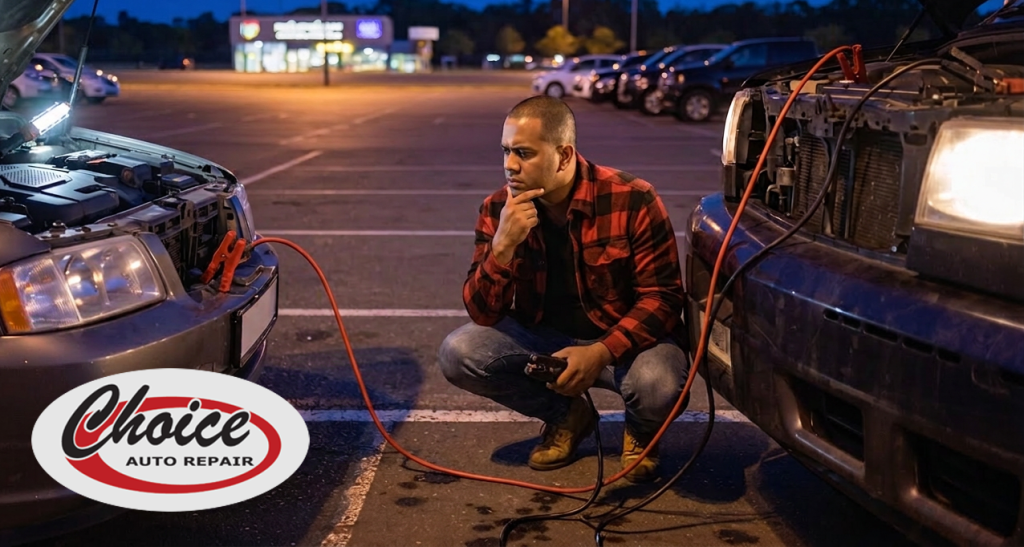
If you are using another vehicle to jump-start your vehicle, park it close enough so the cables can reach comfortably but do not let the vehicles touch. Put both vehicles in Park set the parking brakes and turn off the ignitions. Switch off the headlights, radio and any other accessories in the vehicle.
Now locate the batteries. In trucks and newer cars the battery might be under a cover or in the trunk. If the battery is hard to access check for jump points under the hood.
To jump-start the vehicle follow these steps:
- Connect the clamp to the positive terminal on the dead battery. Make sure the clamp is attached to metal and feels solid.
- Connect the red clamp to the positive terminal on the good battery.
- Connect the clamp to the negative terminal on the good battery.
- Connect the remaining clamp to a solid unpainted metal point on the dead vehicles engine block or chassis away from the battery and moving parts.
This is the step that keeps things safest. You want to avoid a spark near the battery so attach the clamp to a clean engine lifting bracket a sturdy bolt head or a designated ground post.
- Start the vehicle and let it idle for a few minutes. This will give the battery a surface charge, which makes it easier to start the vehicle.
- Try starting the vehicle. If it cranks slowly wait a minute or two. Try again. Avoid repeated attempts because the starter can overheat.
If the vehicle still will not start after a tries stop, you might be dealing with a serious problem, like a bad starter or a charging system issue.
To disconnect the cables follow these steps:
- Remove the clamp from the ground on the dead vehicle
- Remove the clamp from the good battery negative
- Remove the clamp from the good battery positive
- Remove the clamp from the dead battery positive
Keep the clamps from touching each other or any metal as you remove them.
If you are using a portable jump starter the process is similar. Connect the clamp to the battery positive then connect the black clamp to a solid ground point on the engine or chassis. Turn the jump pack on wait for the indicator and start the vehicle. Once it starts turn the jump pack off and remove the clamps.
Common Mistakes That Cause Damage (And How To Avoid Them)
There are some mistakes that can cause damage when jump-starting a vehicle. One of the common mistakes is reversing the polarity of the cables. This can blow fuses damage the alternator and harm electronics. Always locate the terminal on the battery case or terminal cover and do not rely on cable color alone.
Another mistake is placing the black clamp on the dead battery negative terminal. This can create sparks and heat at the connection point. Instead use a chassis ground point to reduce the risk.
It is also important to keep the clamps clean and free of corrosion. If the clamps are biting into corrosion of metal you may get clicking no crank or overheating clamps. If you see corrosion a quick twist of the clamp can help, but if corrosion is heavy it is better to get the terminals cleaned properly.
After The Jump: What To Do Next
After you jump-start your vehicle it is important to keep it running for least 20 to 30 minutes. This will give the battery a chance to recharge. If you have to shut it off away you may not have enough charge to restart the vehicle.
If the battery is old or has needed a jump more than recently it may be time to replace it. Many drivers assume the battery is the problem. A weak alternator, a parasitic draw or a failing starter can look very similar on a cold morning.
Pay attention to warning lights on the dashboard. A battery light or charging warning after a jump is a sign that the alternator may not be charging properly.
Quick Troubleshooting If It Still Will Not Start
If the vehicle still will not start after a jump there may be a serious problem. If you hear a click but the engine does not crank it may be a cable connection, a weak donor battery or a failing starter. Recheck the clamp contact points and the ground location.
If the engine cranks but will not fire the problem may not be electrical all. You could be, out of fuel dealing with an immobilizer issue or facing another engine management problem.
If you see smoke, smell burning plastic, or the cables get hot, quickly stop immediately! Heat is a sign of resistance, a wrong connection, or a battery issue that should not be forced.
Best Practices For Cars Vs. Trucks
For cars, a regular set of good jumper cables or a decent jump pack is enough. For trucks, big gas engines and many diesel setups, thicker cables and a better jump pack are really important. Trucks also tend to have things running, like lights and heaters and if you are trying to jump a truck with all these things on you are making it harder than it needs to be.
If your truck has two batteries you should follow the instructions from the person who made the truck if they gave you any. On some trucks, jumping the battery in place can cause problems with charging or make it hard to figure out what is going on later.
Let Us Help You Get Back On The Road
Jumping a battery is something every driver should know how to do but being safe and doing it in the order is what keeps a simple jump from becoming a big repair job. If your car needed a jump there is a chance the battery or the thing that charges the battery or the connections need to be looked at soon.
If you want us to check your battery and the system that charges it replace a battery or help you figure out why your car will not start you can call (984) 363-4876. We will take care of you quickly and safely so you can get back to your day.