
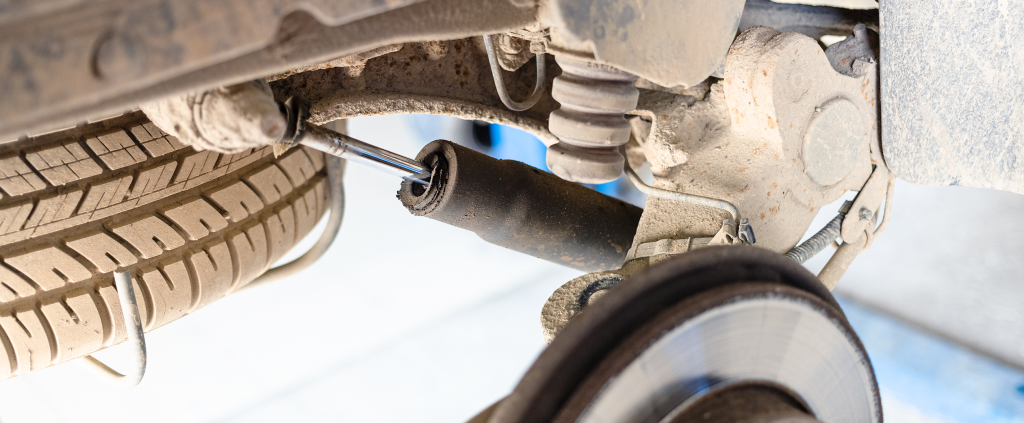
Your suspension is what’s keeping you cozy and secure on the road, and what’s making everything move smoothly are your struts and shocks. These vital components have a heavy responsibility of soaking up shock and providing you with stability during each trip.
Consider shocks and struts as shock absorbers of your vehicle’s movement. They are what:
- Keeps your tires stuck to the road
- Regulates your car’s bounce and sway
- Supply stability during turning and hard braking
- Provide a smooth, comfortable ride
When these major components start failing, your safety is at risk. Worn-out shocks and struts can cause unstable handling, longer stopping distances, and loss of control, particularly under emergency brakes or rain and snow conditions.
The following are some of the signs that lead you to believe your shocks and struts need to be repaired, getting in front of any issues that may arise, and ensuring your vehicle remains safe.
Learning Shocks and Struts: What They Do and Why They’re So Important
Your suspension system makes use of two very vital components: shocks and struts. Although used together, they each play a role in making your ride smooth and stable.
The Role of Shocks
Shocks are shock absorbers on your car, they soak up the shock when you hit bumps or potholes in the road. They’re similar to your car’s muscle system – they regulate the up-and-down movement of your tires so your car won’t bounce like a rubber ball after each bump in the road.
The Role of Struts
Struts offer structural support to your suspension system. They’re your suspension’s structure, bearing the weight of your vehicle while maintaining your wheels in alignment. Struts integrate several suspension components into one unit, including:
- The coil spring
- The shock absorber
- The steering knuckle
- The strut bearing
The Importance of Well-Maintained Shocks and Struts
Well-maintained shocks and struts deliver:
- Enhanced vehicle stability during turns
- Improved tire-to-road contact
- Better braking performance
- Reduced body roll
- Smoother ride quality
These parts have a direct effect on your road safety. When they are properly maintained, you have a good response to steering, even stopping distances, and solid cornering, regardless of any condition of driving. Worn-out or battered suspension components bring hazardous driving conditions, particularly while carrying out emergency maneuvers or when it is rainy outside.
Five Warning Signs That Your Shocks and Struts Are Failing
Your car’s suspension gives you clear warning signs when it needs to be inspected. The signs may turn into problems before they become downright safety problems.
1. Excessive Bouncing After Driving Over Bumps
- A quick way to check your suspension’s health is the bounce test:
- Park your vehicle on level ground
- Press down firmly on your car’s hood or trunk
- Release quickly
- Count the bounces
A healthy suspension system will stabilize after 1-2 bounces. If your vehicle keeps rocking up and down like a boat in stormy waters, your shocks or struts should be replaced.
This excessive bounce isn’t just a nuisance – it’s dangerous to drive with for the following reasons:
Less Tire Contact: Your tires have fewer points of contact with the road
Poor Handling: Your vehicle is more difficult to handle while making quick maneuvers
Increased Stopping Distance: Your vehicle takes longer to stop completely
Rollover Risk Increased: Your vehicle is unstable when cornering
Even while driving at a normal rate, you see your car thudding time and again as you drive across speed bumps or potholes on the road. This means that your suspension system does not have ease in road shock absorption, straining the rest of your car components to do more than they should and endangering your life.
Picture your vehicle’s struts and shocks as running shoes – they have to absorb shock without sacrificing stability. When worn out, every step (or, in this case, bump) is rocky and hazardous.
2. Sinking Nose upon Braking and Longer Braking Distance
When you step on your brake pedal, your vehicle should slow down smoothly and evenly. If you find your front of the vehicle nose diving sharply when you brake – “nose diving” then your struts or shocks are probably bad.
Worn-out suspension parts can’t manage your vehicle’s weight transfer upon braking. This creates a domino effect on your vehicle’s performance. Your front end will sag, leading to uneven weight distribution on the vehicle. Your tires lose perfect road contact, which greatly contributes to your longer stopping distance.
This combination places you and your passengers in actual jeopardy, namely, emergency braking. A vehicle with good struts and shocks will not lean in braking, and all four tires are firmly glued to the road.
A quick test: Observe your vehicle’s behavior in your rearview mirror when slowing down at a safe pace. If the front lowers significantly and the rear lifts quite a lot, it is time to get your suspension system inspected by an expert technician.
3. Unusual Noises, Such as Clunking or Squeaking When Driving
Your car does not have to sound like a drum line on the highway. Unusual sounds your suspension system makes are some warning signs you do not want to disregard. Here’s what different sounds might indicate:
- Clunking Sounds
- A heavy knock when driving over bumps
- Loud thunks during turns
- Metal-on-metal sounds during acceleration or braking
These noises often signal loose mounting bolts, worn bushings, or damaged shock absorbers that have lost their internal components.
- Squeaking or Squealing
- High-pitched sounds during slow turns
- Squealing when going over speed bumps
- Persistent squeaking during regular driving
The squealing is usually caused by dry-out rubber bushings or metal-to-metal contact caused by inadequate lubrication. With your shocks and struts wearing out, their bushings and inner seals lose their integrity, causing such characteristic noises.
When you hear these noises, have your suspension inspected. Such signs of warning, when not attended to, may lead to complete component failure and impact your vehicle’s handling capability.
4. Leaking Fluid from Shocks or Struts
See an oily drip or any other moisture near your shocks or struts? That’s a warning you cannot ignore. Hydraulic fluid holds your vehicle’s shock absorbers and struts, and they are critical to how it runs. Once fluid starts leaking, you can be sure the seals have worn out.
- A quick inspection can reveal these leaks:
- Look for dark, oily patches on the exterior of the shock or strut
- Check for wet, shiny areas around the body of the component
- Watch for fluid trails running down from the top of the unit
Leaky hydraulic fluid has a direct effect on your vehicle’s performance. With improper fluid levels, your struts and shocks lose their capability to manage bounce and sway. It is like a bicycle pump without air – it just can’t perform its function. Your vehicle will become unstable when cornering, traveling over bumps, making sudden stops, or lane changes at high speeds.
These leaks do not repair themselves and keep on getting worse with time. When your suspension components wear out quicker because of leaking dampening fluid, other components in your vehicle experience added wear.
5. Unconventional Tire Wear Patterns
Tires can provide a lot of information about the state of the suspension system. When the struts and shocks wear out and get inefficient, the tires will provide a very irregular touch against the road. This poor steady contact is the culprit behind fascinating tire wear patterns that indicate potential suspension problems.
Look for these specific tire wear signs:
Cupping or scalloping – round dips or worn patches across the tire surface
Edge wear – excessive wear on either the inside or outside edges
Patchy wear – random spots of accelerated wear across the tire tread
These abnormal patterns of wear not only shorten the life of your tires but, especially when combined with uneven tire wear, leave little doubt that your suspension system needs attention. Dull shocks and struts make the tires bounce and skip rather than hug the road, creating uneven contact and excessive wear on the tires.
A simple visual inspection of your tires can reveal these signs. Run your hand over the surface of all four tires – any odd bumps, dips, or irregularities mean a professional suspension check is in order.
Why Replacing Worn Shocks and Struts Matters for Safety and Car Performance
Worn-out shocks and struts aren’t just a comfort issue – they’re a safety upgrade for your vehicle. New suspension parts provide:
Better Handling: Your vehicle responds better to steering and handling during emergency maneuvers
Better Vehicle Control: Your vehicle responds to steering inputs better and stays stable during emergency maneuvers
Better Braking Performance: Your car brakes 20% shorter with properly maintained shocks and struts
Better Tire Life: Your tires wear evenly and last longer, saving you money on premature replacements
Better Road Grip: Your tires make equal contact with the road surface when wet or dry
Delaying until replacements are required puts you at risk of hydroplaning during rain, loss of control while performing sudden lane changes, and rollover danger from SUVs and high-profile trucks. It can also lead to total suspension failure, which can result in accidents.
Consider your suspension system to be your vehicle’s safety net – once it’s compromised, every ride is a risk. Professional maintenance ensures that you and your passengers are safe and maintains your vehicle’s performance potential.
OEM vs Aftermarket Parts: Making the Right Choice for Shock and Strut Replacement
At the time of replacement for your shocks and struts, you will decide whether to purchase OEM or aftermarkets. Read on for a little more information on both of them:
OEM Parts
- Direct replacements made by your vehicle’s manufacturer
- Guaranteed perfect fit and compatibility
- Higher price point
- Consistent quality standards
- Original performance specifications
Aftermarket Parts
- Multiple brands and quality levels available
- Cost-effective alternatives
- Varied performance options (standard to high-performance)
- Potential fitment variations
- Wide availability
It depends on a range of critical factors that determine your choice between OEM and aftermarket components. Cost is the most important initial consideration. Most of the aftermarket components are generally 20-40% less expensive than their OEM counterparts. Age also becomes a critical factor. Most fresh cars are very well suited to enjoy the fit and specifications met by OEM components, while older cars will do very well with high-quality, less expensive aftermarket components. Requirements for driving cannot be overlooked—enthusiasts may opt for after-market specialty offerings designed for optimal handling or longevity in place of factory specs. OEM parts also come with manufacturer warranties, which give extra assurance for their quality and longevity.
We at Choice Auto Repair will serve to help you determine what kind of parts are suitable for your vehicle and your actual driving needs. We will assist you in identifying the most suitable parts to be fitted on your specific vehicle and for your particular driving requirements. Both our OEM and reputable aftermarket brands that will meet your budget and preference.
Professional Auto Repair Services vs. DIY Suspension Maintenance
Replacing shocks and struts is not your run-of-the-mill DIY task. These are specialty repairs that take specialized equipment in the form of spring compressors, torque wrenches, and alignment tools, which most home shop mechanics don’t possess in their garage. These repairs entail the risk of playing with lethal compressed springs and experimenting with tight torque specifications – an incorrect move would put your life at risk.
Professional auto repair services offer important benefits for suspension work:
Safety-First Approach: Certified technicians follow strict safety protocols when handling compressed springs
Proper Alignment: Post-installation wheel alignment ensures optimal tire wear and handling
Complete Diagnosis: Trained eyes spot related issues like worn bushings or damaged mounting points
Warranty Protection: Professional installations often come with labor and parts warranties
The expertise of a skilled technician helps identify subtle suspension problems you might overlook. They can identify worn parts, inspect bushing wear, and test mount points – vital information that affects your vehicle’s handling and safety.
Given the intricacy and safety issues at stake, professional installation is a worthwhile investment in your vehicle’s dependability and your own peace of mind.
How Choice Auto Repair Enhances Your Vehicle’s Suspension Health in Raleigh
At Choice Auto Repair in Raleigh, NC, our family-owned business has been doing auto repairs for over 30 years. Our ASE-certified technicians have the latest diagnostic equipment to properly diagnose your car’s suspension system.
We know how crucial it is to keep your suspension in its best condition, and that’s why we provide:
Digital Vehicle Inspections – Photos and detailed report so that you can see exactly what’s going on with your shocks and struts
Same-Day Service – Quick turnaround times to get you back on the road safely
Loaner Cars – Available with qualified repairs so you can maintain your daily routine
Flexible Financing Options – Making essential suspension repairs accessible to every budget
Your safety is paramount. We employ only high-quality OEM and aftermarket components that come with good warranties. Our mechanics are also frequently trained to keep them up-to-date with present technologies and repair techniques for suspension systems.
Located in Raleigh, we provide assistance in keeping your car’s suspension system in good working condition from Monday through Friday, 8 AM to 5:30 PM. Our transparent pricing structure and easy-to-follow descriptions ensure you’ll always be in the loop about what your car needs.
Choose Choice Auto Repair
Your shocks and struts are essential to your safety on the road. Be aware of these five warning signs that your car requires servicing, like excessive bouncing or unusual noises. Don’t wait to get these problems fixed. Come to the Choice Auto Repair shop in Raleigh for certified mechanics to thoroughly inspect your suspension system; we will assist you in keeping optimum car performance and ensuring you are safely driving on the road. Make an appointment now by calling us at (984) 363-4876 to recover a smooth and comfortable ride.